
Generate doesn’t just answer — it hands back the work itself: tables, charts, and graphs. And you can launch Skills, which is like adding domain experts to your team.
A scanned invoice lands in the inbox — creased, half-legible, stamped by three different departments. A person would need ten minutes and a good eye. Generate reads it in the time it takes to say the word “invoice,” pulls the vendor and the total into a table, and flags the one line that doesn’t match the PO.
That’s what sits past the connectors covered in the last Field Brief. OCR makes scanned and handwritten pages readable in the first place. Artifacts — tables, charts, documents — are what Generate hands back in addition to a paragraph of text. And Skills are reusable expertise a team builds once and runs every time the same job comes up. Reading and writing, not just reaching.
Generate reads scanned pages, handwriting, and faxed contracts, in multiple languages — demonstrated in a case in Brazil.
Tables, charts, & docs Generate hands back — something a team can use at future dates because they’re saved.
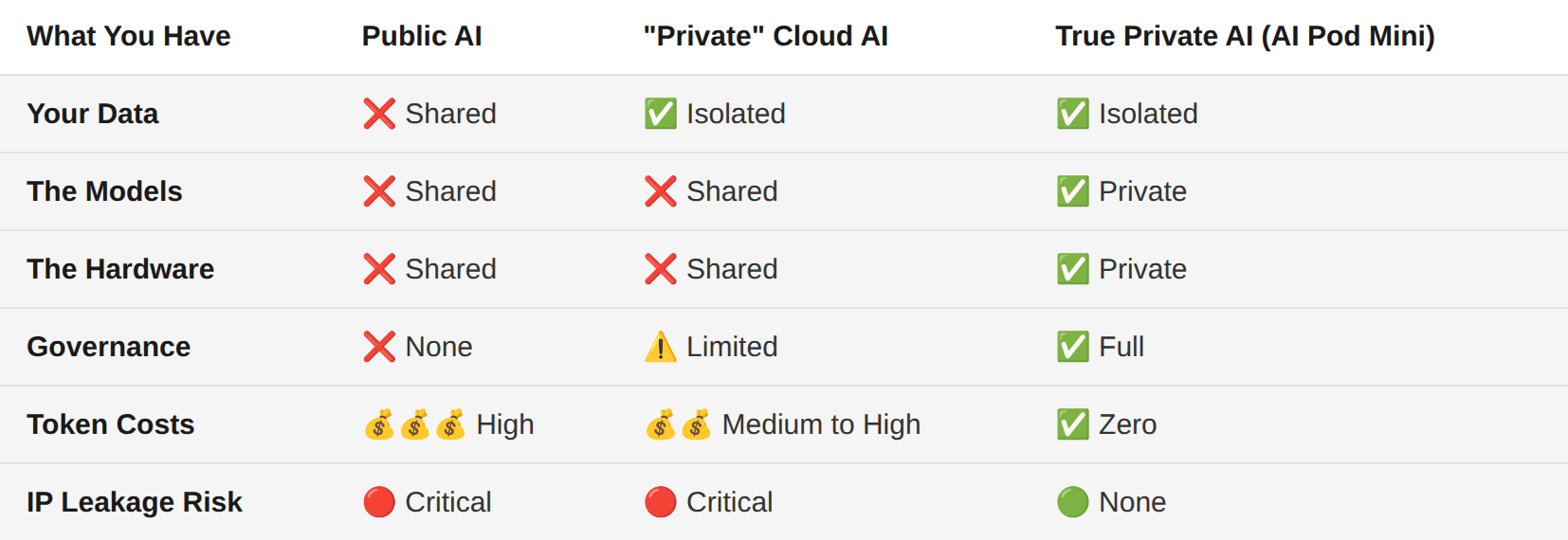
This comparison table is an example of an artifact. Generate produced it directly, instead of writing just a paragraph. It did it automatically. Artifacts can include text, diagrams, workflows, tables, charts, drafted letters, chronologies, and more.
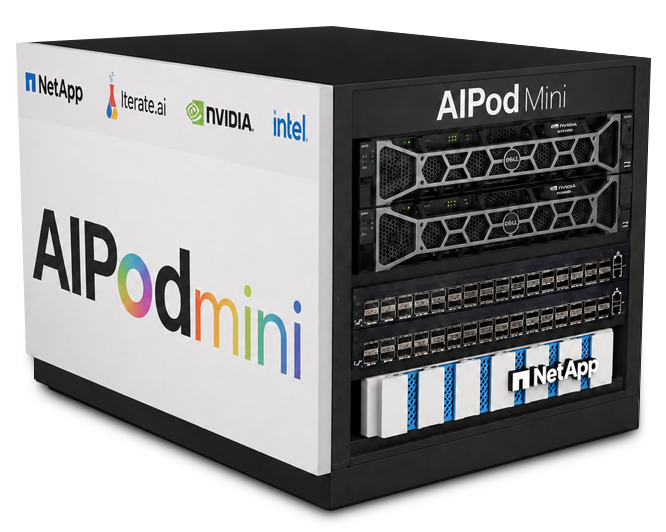
Connectors invite Generate’s AI into your systems. Integrate your CRM or a live database, upload PDFs (auto-OCR’d), or add Skills. Then your private work includes your private knowledge base, and artifacts are created automatically. This full AI package runs inside the AIPod® Mini. Privately.
A prompt is something you type once, for one question. A Skill is something built once — tested, refined — and can be re-used every time a similar job comes up. Type a skill, like “/market-mapping”, into a prompt or an Agent command line, and hit return. It’s that easy.
Generate gives you a skills library. You can use expertise built by others.
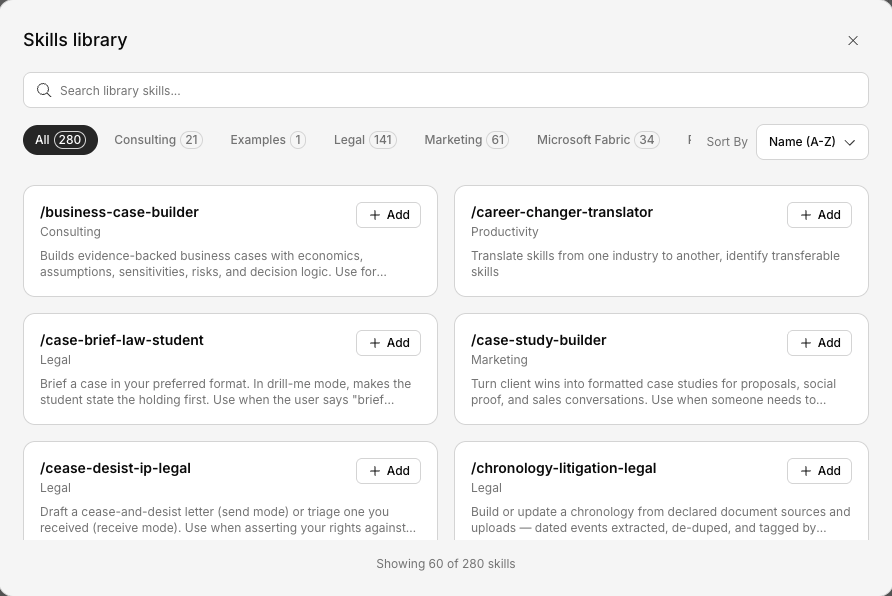
Generate’s skills library — 280 skills and growing. The library, as of early August 2026, spans Legal (141 skills), Marketing (61), Microsoft Fabric (34), Productivity
(22), and Consulting (21) — plus any custom skill a team builds and adds itself.
Each one is scoped to a real job: brief a case, draft a cease-and-desist letter, build a
chronology from source documents, size a market. Each is a specific piece of expertise someone (often a domain expert) has built and tested.
A Skill attaches to a specific agent, or gets invoked directly inside a prompt — or both. Generate is versatile.
Sizes and segments markets using top-down and bottom-up logic, then identifies white space and where-to-play choices.
Maps where profit is created, captured, and leaking across a market, product set, customer base, or value chain.
Builds executive strategy narratives using Pyramid Principle, SCQA, answer-first communication, and hostile-question prep.
Builds a strategic risk register with likelihood, impact, mitigations, triggers, owners, and contingency moves.
A Project is a shared workspace, not a single chat. It can hold multiple chats and agents, each with its own skills, connectors, and knowledge. Anyone invited can see and use what’s inside.
On how Generate reaches live systems and stored records: Data: Real-time & Stored. From One Place. On what a tool call actually is: How an Agent Actually Works. On the templates that ship ready to use: Inside Generate: 200 Ready-Built Agents.
Full series and certification information — iterate.ai/partners/netapp/private-ai-education-and-certification-program.
A joint educational series on private AI and the AIPod Mini. NetApp® — the governed data-control layer. Iterate.ai — the private intelligence layer.