
The old attacker stole data and left. The new attacker changes what your AI believes — and stays.
Memory is the feature that makes AI useful. It is also the primary attack surface. Traditional security was built for systems of record: attackers targeted three layers — databases, APIs, endpoints — and a breach meant loot, with clear cause and effect in the logs. AI systems are systems of inference, and inference can be manipulated in ways a database cannot.
Three layers to defend: databases, APIs, endpoints. A breach was theft. High-value, centralized loot. Clear cause and effect: you see the attack and system penetration in the logs.
Five layers to defend: working, conversational, vector, and behavioral memory — plus system-level learning. A breach corrupts inference. Subtle, persistent, compounding that is closer to manipulation than outright hacking.
Each of the five layers of memory is a door into the AI and how it builds responses. Each of these memory layers can be manipulated:
Manipulate the AI in real time: reveal data, bypass filters, take actions. AI interprets instructions, and interpretation can be exploited. Today’s most active vector.
Poison what the AI remembers about a user or organization. Each planted “fact” narrows what it thinks, invisibly, for months.
Plant misleading content where similarity search will retrieve it — SEO hacking for AI brains. One poisoned document shapes every downstream answer.
Shape the usage patterns the system adapts to: force retries, bias workflows, nudge decisions. The bias compounds and resists attribution.
If learning is shared across customers, one poisoned interaction can influence everyone — one compromise, thousands of organizations.
AI spots anomalies faster than humans and automates quarantine and rollback. The shift isn’t a dramatic jump from "safe" to "unsafe".The shift is step-hacked (visible in logs) to manipulated (visible only in patterns).
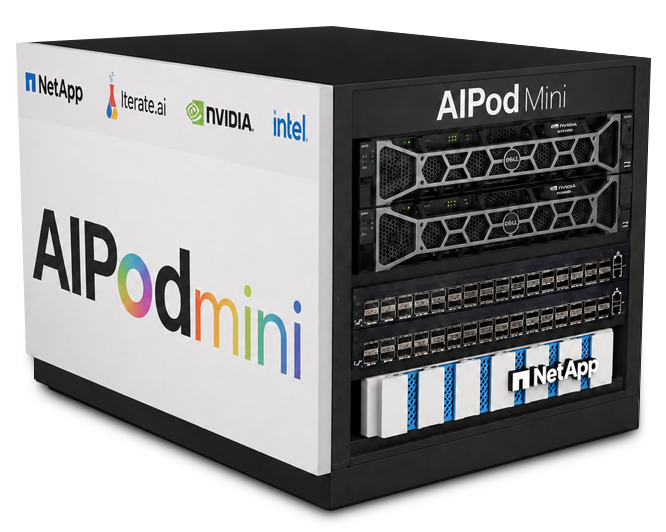
On the AIPod Mini the learning loop is the customer’s alone with no shared tenancy to cascade through. Iterate’s AgentWatch logs every prompt, retrieval, and decision, so corrupted inference shows up as a pattern, not a surprise. NetApp® snapshots roll poisoned memory back to a clean point.
Corrupted inference is just the start — profiling, impersonation, leverage, and doubt in past decisions all follow from the same open door. The fix is architecture, not policy: the more private the memory, the smaller the attack surface. Keep your memory yours.
Read first: The Oohs, Awes, and Dangers of AI Memory — the five layers this brief defends. Companion: Six AI Risks Your IT Controls Can’t Catch. Full series — iterate.ai/partners/netapp/private-ai-education-and-certification-program.
A joint educational series on private AI and the AIPod Mini. NetApp — the governed data-control layer. Iterate.ai — the private intelligence layer.