
There are three ways to run AI. Comparing them side by side: who controls it, what it costs, and who ends up owning what it learns.
| Public AI | Private AI | Sovereign AI | |
|---|---|---|---|
| Who's in charge | The company you rent from | Your own company | The government |
| Where your data lives | Someone else's computers | Your own building | Inside the country's borders |
| How much you can change | Just your questions | The whole system | Whatever the country decides |
| Cost to start | Low: pay as you go | Up front: you buy the box | Very high: a whole country pays for isolation at all layers |
| Cost to keep running | Unpredictable: every question adds to the bill, and agents run constantly | Predictable: you already bought it, so asking more costs no more | Enormous, and carried by taxpayers |
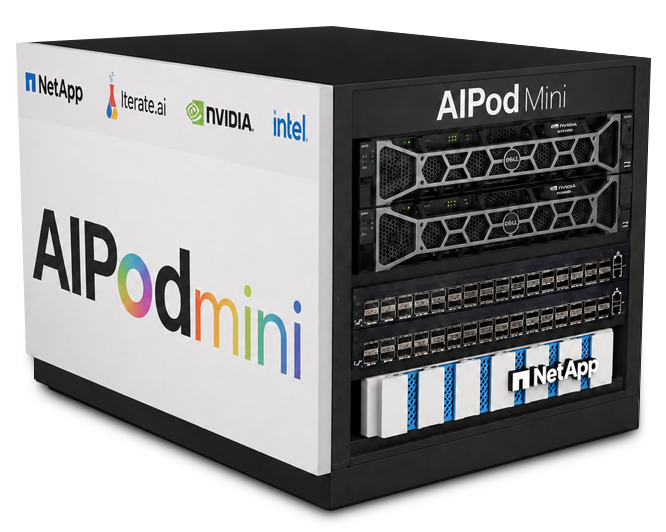
| How fast | Right away | Traditionally a few weeks; about 20 minutes with AIPod Mini | Takes years |
| Who owns the ideas | Not really you | All yours | Belongs to the country |
| Who else learns from you | Your rivals — they query the same model you just taught | Nobody. What you teach it stays behind your walls | Others inside the country, by design |
Renting is fast. Owning is safe. The AIPod Mini is the first option that makes owning just as fast as renting.
Sovereign AI sounds like the strongest option on the table: a country running its own stack, inside its own borders, under its own law. In practice, sovereign AI is the hardest of the three to actually achieve.
The chips are usually designed elsewhere, the base models often trained elsewhere, and the people who run it trained elsewhere too. Declaring sovereignty is a policy decision; achieving it is a supply-chain problem, and very few countries have solved it end to end.
HUMAIN, funded by the sovereign wealth fund.
G42 and the Falcon models, state-funded.
Mistral, plus state-backed investment.
IndiaAI Mission — central GPU buying.
Wealth alone does not make a programme — some of the largest sovereign funds have no comparable build.
Nothing confidential, the job runs occasionally, and speed matters more than control.
The data is yours to protect, the job runs constantly, or the learning is worth keeping. Most enterprise work sits here.
Driven by national law and strategy, not procurement — decided above any single buyer.
Private and sovereign are often used interchangeably. They are not the same. Private means your organisation controls it; sovereign means your country does — which may or may not include you.
For almost every enterprise the real choice is the first two columns. Sovereign matters, but it is decided at national level — and rarely removes the need to own your own.
Full paper, 12 pages — iterate.ai/partners/netapp/papers.
A joint educational series on private AI and the AIPod Mini. NetApp — the governed data-control layer. Iterate.ai — the private intelligence layer.