
Papers 1-5 proved that today's frozen AI models leak intelligence in shared environments.
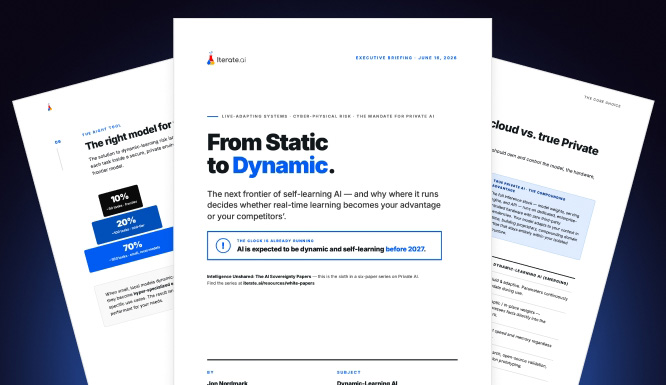
Paper #6 reveals the next frontier: by 2026-2027, AI will shift from static execution to dynamic, real-time learning—transforming from a read-only tool into a self-modifying organism that physically rewires itself based on your inputs.
This amplifies the intelligence ownership problem by orders of magnitude.
In shared environments, your operational patterns become permanent weight updates accessible to competitors. In private deployments, dynamic learning transforms your AI into a hyper-specialized expert that compounds your advantage—and yours alone.
The paper analyzes five emerging paradigms (Test-Time Training, Nested Learning, Titans, Dragon Hatchling, Recursive Self-Improvement), identifies new security vulnerabilities (weight drift, model collapse), and provides a four-part framework for deploying dynamic AI safely within Private AI architectures.
—
A six-paper series on Private AI
Intelligence Unshared: The AI Sovereignty Papers
1 of 6: When Software Started Thinking2 of 6: The Token Tax3 of 6: Private AI — Why Model Isolation Matters More Than Data Privacy4 of 6: Owning Intelligence5 of 6: The Death of the Token Tax6 of 6: From Static to Dynamic — The Next Frontier of Self-Learning AI